Begin with meaning · 25% off your first order with FIRSTSELENOVA25


How does a full moon affect us ?
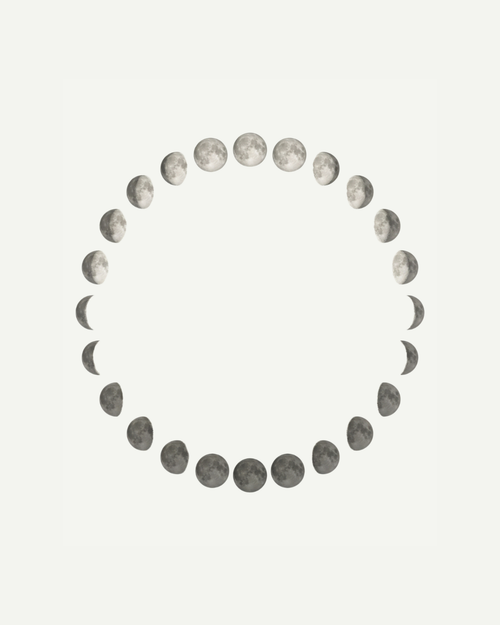
The full moon, also called plenilunium, is the brightest and most noticeable phase of the lunar cycle. It appears about once every 29.5 days, when the Moon sits opposite the Sun and reflects its light fully towards earth.
For centuries, the full moon has been linked with fertility, the cycles of life, death, and rebirth. Beyond its astronomical significance, even today, many experience it as a pause in time, a moment when things feel heightened, clearer, or ready to be released.
In this article, we explore what happens during a full moon, how it may affect the body and emotions, its spiritual and emotional benefits, and when the next full moon will occur.
What Happens to the Body During a Full Moon?
From both a scientific and spiritual perspective, the most documented effect of the full moon on the human body is related to sleep.
Changes in Sleep and Rest
Research suggests that around the time of a full moon some people notice changes such as:
-
-
-
Taking longer to fall asleep
-
Sleeping fewer hours overall
-
Experiencing less deep sleep
-
-
One possible explanation is melatonin suppression. Melatonin is the hormone that helps regulate our sleep and wake cycle, and increased nighttime brightness, even when subtle or unnoticed, may mess with its release.
What’s interesting is that similar sleep changes have been observed even in people sleeping in completely dark rooms. This has led researchers to wonder whether our internal clocks may still be loosely connected to lunar cycles.
How Does the Full Moon Affect People?
Not everyone is affected in the same way. The influence of the full moon is highly individual. Sensitivity to the full moon can vary depending on stress levels, sleep quality, daily routines, and individual circadian rhythms.
Mental State and Energy
When sleep is affected, it’s common to feel:
-
-
More tired during the day
-
Less focused
-
Mentally active late at night
-
Emotional Awareness
Many people describe the full moon as a time when emotions come closer to the surface, during this phase, people sometimes report that:
-
-
-
Emotions feel more intense, harder to ignore
-
Thoughts become clearer
-
Unresolved emotional situations surface
-
-
While science has not proven that the full moon directly causes emotional changes, sleep disruption can amplify emotional sensitivity, which may explain these experiences.
Myths vs. Reality
Popular culture often links the full moon to erratic or aggressive behavior. Scientific research, however, does not strongly support these claims. Today, these ideas are mostly considered cultural myths rather than scientific facts.
What Are the Benefits of the Full Moon?
From a medical standpoint, there are no proven physical benefits. However, the full moon offers meaningful emotional, symbolic, and spiritual benefits, especially when experienced consciously.
Completion, Release, and Clarity
Across many cultures, the full moon symbolizes:
-
-
-
Completion
-
Closure
-
Letting go
-
-
It’s often seen as a natural checkpoint. A time to reflect on what has reached its peak and what is ready to be released.
Emotional Well-Being and Ritual
Practices such as meditation, journaling, intention-setting, or release rituals during the full moon can support emotional clarity, a sense of calm and a deeper sense of self-awareness.
While these practices are symbolic, they align closely with the psychological benefits of mindfulness and reflection.
Creativity and Intuition
Many people also notice increased creativity or intuition around the full moon. While these experiences can’t be scientifically measured, they often feel real and meaningful to those who experience them.
When Is the Next Full Moon?
The full moon occurs about once a month. Here are some of the upcoming full moons:
-
-
January 3, 2026 - Wolf Moon
-
February 1, 2026 - Snow Moon
-
March 3, 2026 - Worm Moon
-
April 2, 2026 - Pink Moon
-
The moon typically appears full for one to two days around the exact date, extending its symbolic presence beyond a single night.
Conclusion: Living the Full Moon with Intention
The full moon is more than a lunar phase, it is a cyclical reminder that every process reaches a point of illumination and completion. Physically, its influence is most noticeable in sleep patterns. Emotionally and spiritually, it can serve as an invitation to pause, reflect, and release.
Physically, its influence is most noticeable in sleep. Emotionally, it can be an invitation to slow down, reflect, and release what no longer fits. Approaching the full moon with intention, by resting more, paying attention to emotions, or creating simple moments of reflection, can turn it into a meaningful pause in everyday life.